
Why assigned customers default back to the warranty company
When a home warranty company or manufacturer plan assigns you a job, the customer did not pick you. They picked the plan, and the plan picked you. In their head, the warranty controls who does the work, and that belief survives a good visit.
That is why most assigned customers call the warranty company again next time. They think it is required. Some think calling you directly would cost more or void their coverage. A good share never learned your name because the whole interaction ran through the claim number and the dispatcher.
Here is what most owners miss. That first visit is your one clean shot to change the relationship. You are standing in the customer's home, solving the exact problem they care about, at the exact moment they trust a technician most. The system below turns that one shot into a repeatable workflow.
How conversion works during the visit
The tech introduces themselves by name
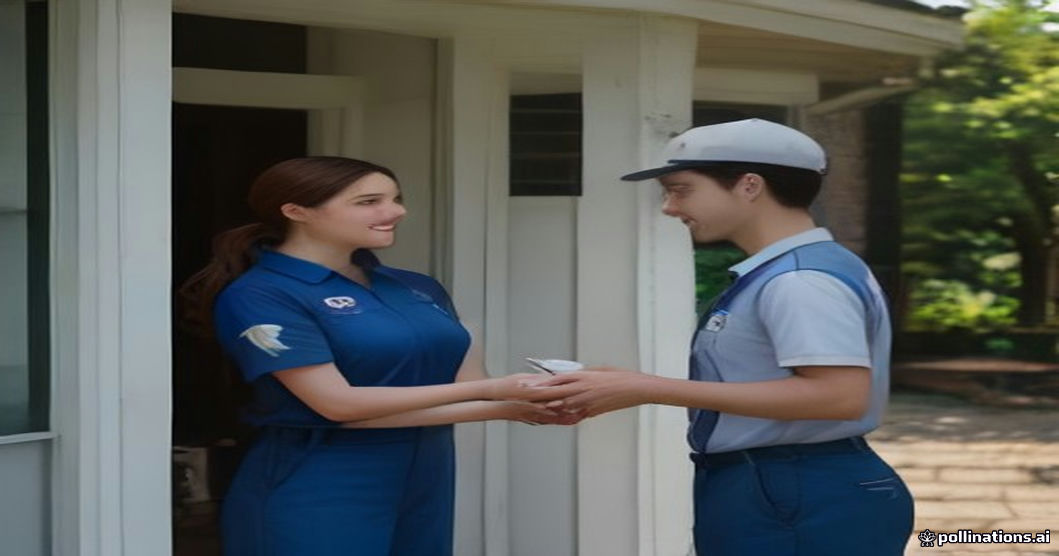
The technician walks in, shakes hands, and says their name and your company name out loud, twice if needed. "I'm Marcus with Northside Heating." Most assigned customers never hear that. A spoken name plus a uniform with a logo is what sticks.
Educate beyond the covered item
Warranty jobs are scoped to one covered item: a capacitor, a control board, a faucet cartridge. The tech who says "the capacitor failed, and the reason it failed is the condenser coil hasn't been cleaned in years" starts a new relationship. You are showing a bigger picture than the plan ever gave them, which only a direct relationship with a company can provide.
Leave a direct-line leave-behind
Every tech carries cards or magnets with a direct phone number and a simple line: "If you ever want to talk to us directly about your system, this is our number." The card goes on the fridge, not in a drawer, because a fridge card survives for years and outlasts any claim number.
Frame it honestly
The pitch never trashes the warranty. The tech should tell the customer to keep the plan if it serves them: "The plan covers parts, so use it for that. If you ever want a second opinion, a tune-up, or something outside the plan, that's where we come in." That framing respects the customer's decision and keeps you on the right side of the network rules.
What techs can and cannot say under network rules
Warranty networks and manufacturer programs have codes of conduct, and you need to know yours cold. Rules vary by network, but the pattern is consistent.
- Allowed in most networks: introducing yourself and your company by name, explaining the full condition of the system, recommending maintenance, leaving a business card or magnet, and telling the customer they may call you directly for work outside the plan scope.
- Restricted in most networks: telling the customer the plan is a bad deal, bad-mouthing the warranty company, quoting to undercut an open claim, or soliciting work that replaces or duplicates the claim while the claim is still open.
- Always required: documenting what you found accurately on the claim, even when the honest finding sends the customer your way later.
Train this word for word and role-play it in the shop. A tech who improvises can put your network standing at risk, and losing the network costs you the whole assigned-jobs channel.
The follow-up path after the claim closes
The visit ends the claim, but it starts your own sequence. Once the claim fully closes, run three touches.
- Review request, framed right. Ask for a review about the technician's work, not about the warranty company. "Would you mind mentioning Marcus by name?" This builds your reputation without a public fight with the network.
- Seasonal reminder. Six to eight weeks later, a short note timed to the next relevant season: a pre-summer AC tune-up or a pre-winter furnace check. It references their system and the tech they met, so it reads as continuity rather than marketing.
- Maintenance offer outside plan scope. Most plans cover breakdowns and skip maintenance. That gap is your lane, and a maintenance agreement is often the first transaction where the customer pays you directly.
Track it like a real channel
If you do not tag it, you cannot measure it. In your CRM, set a source tag called warranty-assigned and apply it at the first touch. Every follow-up and future booking inherits the tag, so the customer's full history stays visible.
Then run two checkpoints. At six months, pull the tag and count how many of those customers have booked anything directly. At twelve months, run it again. Those two numbers give you the conversion rate and the cost per converted customer, which is close to nothing beyond cards, magnets, and follow-up time. At Brand Advertisers, this tag-and-check pattern is the first thing we wire into a client's CRM. It turns a hunch into a report the owner reads in two minutes.
The economics of assigned jobs
Let's be straight about the money. Warranty work pays less per visit than direct retail work. The network sets the rate, the paperwork eats time, and the customer arrived with a price already fixed in their mind. Job by job, assigned work is the weakest margin in your schedule.
The customer file is where the value lives. A converted assigned customer books tune-ups, repairs outside plan scope, replacements, and eventually the big-ticket jobs. They cost almost nothing to acquire because the warranty company paid for the introduction. A modest conversion rate at real volume produces a meaningful book of direct customers over a couple of years.
The honest limits
Some customers are locked to the plan. They will call the warranty company every single time, because the plan genuinely saves them money or the habit is set. Chasing them wastes follow-up dollars.
Conversion rates are modest, and that is fine. If a share of assigned customers convert and each stays for years, the channel pays for itself many times over. Set that expectation with your techs so nobody gets discouraged by the customers who stay with the plan.
The system end to end
- Tag every assigned job in the CRM with the warranty-assigned source tag at booking.
- Brief the tech on the customer's name, the covered item, and the network rules for that job.
- Introduce by name and company at the door, twice if needed.
- Educate beyond the covered item so the customer sees a bigger picture than the plan gives them.
- Leave a fridge card or magnet with a direct phone number on every visit, no exceptions.
- Frame the plan respectfully: keep it for covered parts, call us for everything outside it.
- Close the claim cleanly with honest documentation.
- Send the review request after the claim closes, framed around the technician.
- Send the seasonal reminder six to eight weeks later with a maintenance offer.
- Run the six-month and twelve-month checks on the warranty-assigned tag and report the conversion rate to the team.
Run these ten steps on every assigned job and the warranty channel stops being a low-margin chore. It becomes a paid introduction machine that feeds your direct customer base for years.